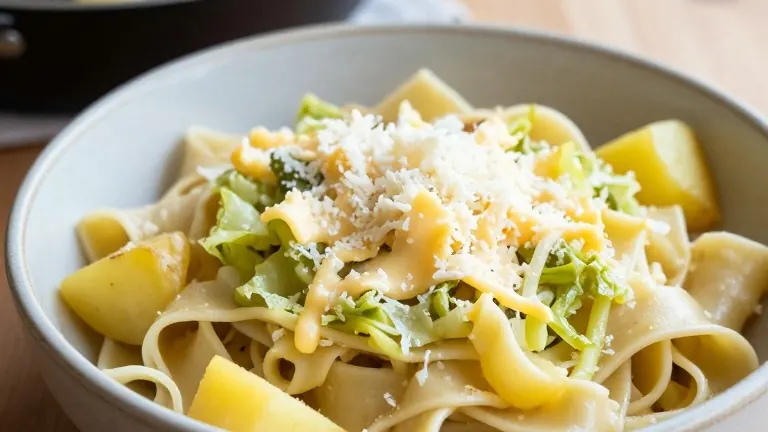
Home cooks can replicate Alpine pasta dish using common grocery store ingredients
A simplified recipe substitutes pappardelle and Gouda for traditional buckwheat noodles and hard-to-find Alpine cheese.
By Olga Donovan ·
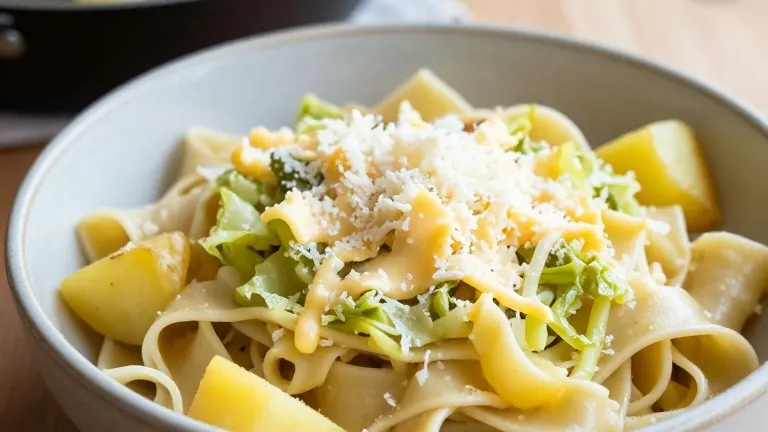
Traditional Italian cuisine often relies on limited ingredients to create hearty meals. A recent recipe for a potato and cabbage pasta dish offers a practical approach for home cooks by swapping rare specialty items for widely available staples.
The dish is inspired by pizzocheri, a pasta made from buckwheat. While the original recipe calls for that specific noodle, the new version uses pappardelle. These wide, flat wheat noodles are commonly found in grocery stores. This substitution reduces the need to visit specialty markets or order online.
The core components of the dish remain potatoes and green cabbage. The recipe calls for two medium-size yellow potatoes, peeled and cut into half-inch pieces. It also requires a quarter of a head of green cabbage, thinly sliced. These vegetables are cooked together with the pasta in well-salted water.
The cooking process begins by boiling the potatoes for approximately 10 minutes. The cabbage and pasta are added next. The noodles are broken into smaller pieces before entering the pot. The mixture cooks for another 7 to 8 minutes until the pasta reaches the desired texture. Meanwhile, a sauce is prepared in a separate skillet.
The sauce consists of half a stick of butter, three tablespoons of extra virgin olive oil, and two cloves of finely chopped garlic. These ingredients cook over medium heat for a few minutes. A generous pinch of black pepper is added before the pan is removed from the heat. The drained pasta, vegetables, and half a cup of reserved cooking water are then added to the skillet.
The final step involves melting the cheese into the mixture. Four ounces of mild Gouda cheese are grated over the pasta and vegetables. This soft cheese serves as a substitute for casera, a hard Alpine cheese that is difficult to source. The dish is tossed to combine and cooked for about 5 minutes. A final topping of freshly grated Parmigiano Reggiano or Grana Padano completes the meal.
The recipe yields a dish that serves as an accessible entry point into a style of cooking known as la cucina povera. This culinary tradition emphasizes making flavorful food from modest ingredients. By using common wheat pasta and accessible cheese, the recipe removes barriers that often prevent home cooks from attempting traditional regional dishes.